
Idea campaigns are a great tool for innovation programs in different ways: they help to better engage people and at the same time generate ideas of higher
Idea campaigns are a great tool for innovation programs in different ways: they help to better engage people and at the same time generate ideas of higher quality.
However, running campaigns properly takes some thought and dedication.
Let us get into this in the next few paragraphs and look at how to get the most out of your upcoming campaigns and how to make sure you get the solution you expected.
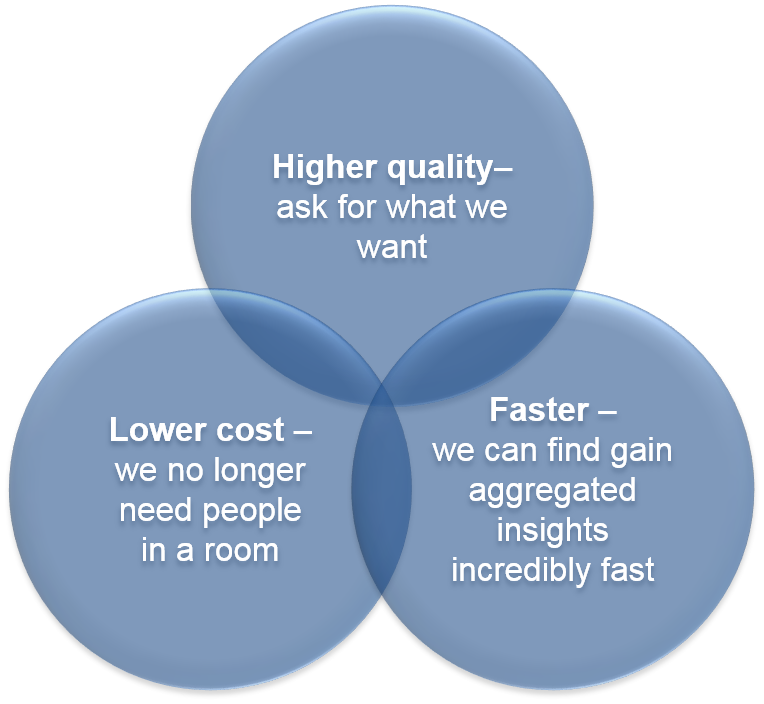
Faster, at a lower cost, and with higher quality – these are just some of the benefits of using idea campaigns. Campaigns help you to address the right audience with a specific question to find a solution for your challenge at hand. Main elements like time limitation, the lead questions and collaboration from different areas in your audience are going to have a big impact on your campaign, pay attention to them!
However, campaigns have to be thoroughly managed to make them successful.
There's a bunch of threats which can harm your idea campaigns and your innovation program permanently. Keep an eye on the following ones as they are really influential.
- Lack of awareness
- Lack of belief in the sponsor
- Lack of visible success
You can avoid them by following a couple of simple rules, the most important rule being:
See your campaign as a challenge, make it fun and interesting for your participants. Don't forget: many of them will participate on top of their day job.
Key considerations before launch:
There are a few things
- Invest in a good campaign question. Before you launch your campaign, make sure you know exactly what you are looking for, as you need to phrase a question which is going to lead your community through the solution-finding process. It's necessary to be clear and precise. Make sure you use a language that everybody in the audience is able to understand.
- Invite a diverse audience. Be open minded as to where insights may come from. The clue is to invite those who can offer a different perspective to the experts in the field.
Once, while we working with a company specialised on building door knobs, the engineers asked themselves: How can we optimize the experience of opening a door on a car?
Well, knowing that they would loose their core business the VP Marketing yield that in the best case, you don't want to use any knob - same case like the keyless cars. Shocked and irritated, kaware that that would smaller their current business, they asked if that's what they were really looking for.
It took them a bit to understand what it means to think outside the box, even breaking up the silos they've constructered in their minds and to create never-before-seen ideas and experiences.
Nevertherless, don’t invite everyone to everything. If invitees cannot relate to the posed challenges, they will become disengaged with your innovation program over time. - Make sure you have a good sponsor. Look for somebody who is senior enough and well known as you want your campaign to gain credibility. When participants see senior management gets engaged in a campaign, they know their submissions are taken seriously. Also, it is important to prove that good ideas are implemented. Make sure your sponsor needs a solution and has the resources to implement it!
- Use seed ideas. Participants struggle to submit ideas to an empty system. Provide them with seed ideas to help them get started. Seed ideas offer some guideance on what submissions should look like in terms of content and quality. Use them to challenge the community!
After launch: keeping it rolling
After the campaign has been initiated it’s going to be your job to keep your community on track and engaged. Otherwise, their day job and routines might let them forget about your campaign.
The campagin process can be structured into several phases. Three of them need your attention in special as this is where things can go wrong. We already spoke about one, so we'll continue with the next one.
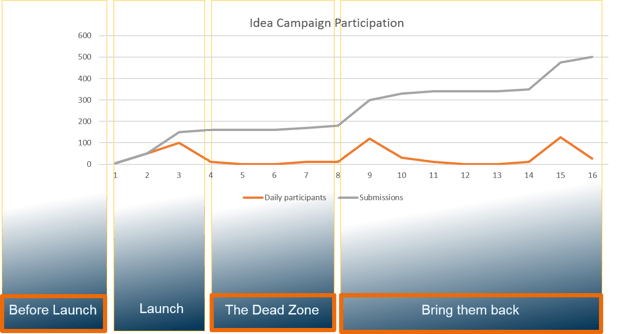
The Dead Zone phase is the most critical. This is when you need to act. During the Dead Zone phase, the number of daily participants is going to drop down to a minimum. Nothing unusual, don't worry! A lot of participants return to their daily job and other obligations after they delivered their input.
Now it's your job to bring them back! Consider the following measures to gain their attention again:
- User your advocate network! (What are innovation advocates again?) They are going to help you to promote your challenge. As evangelists of your innovation program, they’ll share success stories and keep the discussion going.
- Send reminders to your audience; especially address those who haven't participated yet.
- Ask your team members to ensure a good quality level. Push back non-relevant ideas and promote the good ones. Screen the delivered ideas and comments to keep your campaign attractive and interesting.
- Keep pushing comments on submitted ideas to refine and mature them.
Participants with renewed interest are going to push your voting, commenting and collaboration. New participants will join your campaign as they see constant activity and new information. Let them know that taking part is worth their while!
Learn more about idea campaign management
Keeping an eye on these different phases will make it easier for you to set up the right measures, to ensure a special level of interest and engagement in your community.
If you want to know more about this and deep dive into this topic make sure you don’t miss the webinar hold by Colin Nelson, where he shares his experience based on the experience of hundreds of innovation projects with our clients.
