Transformation Leader

Turn Transformation Plans into Trusted, Measurable Business Results

HYPE helps transformation leaders prioritize initiatives, involve the organization, coordinate execution, and make transformation progress visible — so teams understand what is changing, why it matters, and how initiatives are moving toward measurable business outcomes.

roles-transformation

Trusted by global enterprises

#1 Ranked by analysts

the reality of the role

Transformation Fails When People Cannot See the Priorities, Progress, or Purpose

Transformation leaders are expected to turn strategic change into measurable business results. Whether the mandate is cost reduction, growth, efficiency, digital transformation, or M&A integration, success depends on more than a plan.

But transformation programs span multiple teams, functions, and business units. Initiatives are tracked in spreadsheets, updates depend on manual reporting, and priorities are not always transparent. This lack of visibility can create uncertainty, duplication, resistance, and loss of trust.

HYPE helps transformation leaders create one structured system for prioritization, transparency, execution tracking, and measurable impact.

Untitled (2000 x 2000 px) (5)

Common Challenges

  • Leaders lack visibility into progress, ownership, risks, dependencies, and value delivery.
  • Value leakage occurs when initiatives are delayed, duplicated, underfunded, or disconnected from outcomes.
  • Transformation initiatives are fragmented across teams, tools, and business units.
  • Too many initiatives compete for limited resources and attention.
  • Approved initiatives lose momentum during execution.

Common Challenges Icon
Capture

How HYPE Helps Transformation Leaders

1. Capture transformation initiatives & business needs
Capture

Collect initiatives, improvement opportunities, risks, and AI use cases from across the organization in one structured system. Every submission enters tied to a transformation theme, so nothing sits in a silo or a spreadsheet. You replace scattered inputs with a single view of the work your program is accountable for.

2. Evaluate strategic fit, urgency & risk
How_it_works_2

Assess each initiative against strategic fit, business value, urgency, feasibility, and risk using clear criteria and configurable review workflows. AI-driven insights help you identify risks earlier and separate high-return work from effort that won't move the numbers. You make faster, defensible decisions before capital is committed.

3. Prioritize high-value cross-functional work
How_it_works_3

Compare initiatives across business units, operations, IT, finance, and HR against your goals, resources, and expected impact. Direct investment toward the work with the strongest return — and cut what's duplicated, misaligned, or under-resourced. You keep the portfolio focused on outcomes, not on a growing list of projects.

4. Develop execution-ready initiatives

How_it_works_4

Turn selected initiatives into structured plans with clear ownership, business cases, and supporting evidence. Stage-gate workflows guide each one from concept to execution while bringing business units, transformation teams, and leadership into the same process. You close the gap between strategic intent and delivery, and keep every function moving in one direction.

5. Implement, track outcomes & reduce value leakage
How_it_works_5

Move approved initiatives into action and track owners, milestones, risks, and blockers across the portfolio in one transparent view. Flag work that's stalled, duplicated, or unlikely to deliver — before it drains budget. Connect execution to measurable outcomes like cost savings, productivity gains, and growth, so you prove exactly what the program returned.

business impact

Outcomes Transformation Leaders Can Measure

Improve transformation execution and build trust in the change process.

  • Clearer Execution Visibility

    Give leaders one view of transformation initiatives, ownership, progress, risks, dependencies, and expected outcomes.

  • Stronger Organizational Trust

    Make priorities, decisions, initiative progress, and outcomes more transparent so employees understand how transformation is moving forward.

  • Higher Employee Involvement

    Capture employee ideas, concerns, improvement opportunities, and local knowledge to improve transformation adoption and execution quality.

  • More Measurable Business Outcomes

    Track transformation impact through savings, efficiency gains, productivity improvements, revenue potential, adoption, customer value, and strategic progress.

  • Faster Prioritization

    Reduce decision bottlenecks by using structured evaluation criteria and portfolio views.

  • Stronger Accountability

    Create clear ownership, next steps, deadlines, escalation paths, and progress visibility across initiatives.

  • Better Cross-Functional Coordination

    Break down silos and coordinate execution across distributed teams, functions, regions, and business units.

  • Reduced Value Leakage

    Identify stalled, duplicated, misaligned, or under-resourced initiatives before they consume more time and budget.

Core Capabilities

Built for Transformation Execution, Transparency, and Accountability

  • Transformation Initiative Intake

    Capture transformation initiatives, strategic opportunities, improvement ideas, AI use cases, M&A integration initiatives, and business priorities from across the organization.

  • Employee Idea and Feedback Collection

    Involve employees by collecting ideas, risks, local insights, integration opportunities, and improvement suggestions connected to transformation priorities.

  • Initiative Prioritization

    Evaluate and prioritize initiatives based on strategic alignment, expected value, feasibility, risk, urgency, effort, and business impact.

  • Portfolio Visibility

    Track initiatives, ownership, status, risks, dependencies, decisions, progress, and outcomes across transformation programs.

  • Governance Workflows

    Standardize evaluation, approvals, escalation, phase gates, decision-making, and execution tracking.

  • Execution Tracking

    Monitor milestones, workflows, blockers, throughput, implementation progress, and delivery status from intake to outcome.

  • M&A and Integration Visibility

    Support post-merger integration and restructuring programs by making initiatives, owners, risks, dependencies, and progress visible across newly combined teams.

  • Cross-Functional Collaboration

    Coordinate participation and execution across departments, business units, transformation offices, operations, IT, finance, HR, and leadership teams.

  • Reporting & Insights

    Support leadership reporting with portfolio visibility, progress tracking, adoption data, outcome measurement, and business impact reporting.

AI Support

AI Support for Faster Transformation Decision-Making

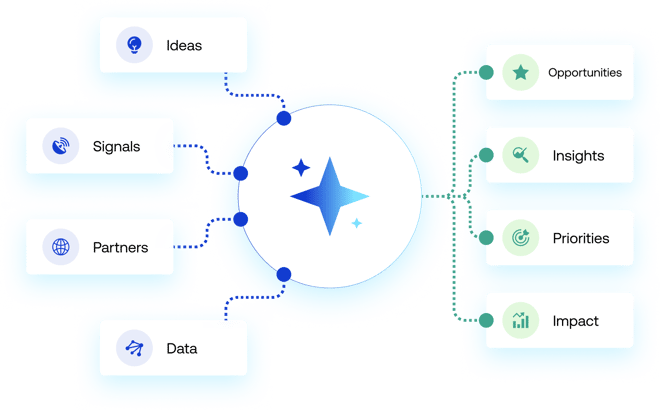
HYPE uses AI-supported capabilities to help transformation teams analyze initiatives, reduce manual review effort, surface patterns, and support better prioritization decisions.

AI can support:

  • Faster reporting and insight discovery across transformation portfolios
  • AI-supported evaluation workflows to support faster prioritization
  • Initiative summaries to speed up review and leadership reporting
  • Innovation Graph analysis to identify relationships and dependencies across initiatives
  • Smart categorization by priority, business unit, value driver, risk, or transformation theme

AI helps teams process more information faster while keeping people in control of prioritization, governance, and final decisions.
Learn More — AI Support for Faster Transformation Decision-Making
hype-ai

FAQ

How does HYPE help transformation leaders?

HYPE helps transformation leaders capture initiatives, involve employees, prioritize work, coordinate cross-functional execution, track progress, manage governance, and measure business outcomes across transformation programs.

What types of transformation initiatives can HYPE support?

HYPE can support initiatives related to cost reduction, growth, operational efficiency, digital transformation, AI adoption, restructuring, merger and acquisition integration, continuous improvement, and strategic execution.

Can HYPE support merger and acquisition initiatives?
Yes. HYPE can help organizations manage M&A and post-merger integration initiatives by creating visibility into priorities, owners, risks, dependencies, progress, and expected outcomes across newly combined teams and business units.
How does HYPE help involve employees during transformation?
HYPE helps organizations capture employee ideas, improvement opportunities, risks, feedback, and local knowledge, then connect that input to transformation priorities and initiatives.
How does HYPE help build trust during transformation?
HYPE makes priorities, initiatives, decisions, owners, progress, and outcomes more transparent. This helps employees understand what is changing, why it matters, and how transformation work is progressing.
How does HYPE improve transformation execution?
HYPE provides structured workflows, ownership tracking, portfolio visibility, governance processes, and reporting so transformation teams can monitor progress, risks, blockers, and outcomes.
How does HYPE help reduce value leakage?
HYPE helps identify initiatives that are stalled, duplicated, misaligned, delayed, under-resourced, or disconnected from measurable outcomes.
Does HYPE support execution tracking?

Yes. HYPE helps organizations track initiative progress, ownership, workflows, milestones, portfolio status, risks, and execution outcomes.

Can HYPE support transformation reporting?

Yes. HYPE provides portfolio visibility and reporting to support leadership updates, executive reviews, adoption tracking, and business impact measurement.

Is HYPE only for innovation teams?

No. HYPE supports innovation, transformation, continuous improvement, AI use-case governance, operational improvement, M&A integration, and strategic initiative management across complex organizations.

Turn Transformation Activity into Trusted, Measurable Business Results

Replace fragmented initiatives, manual status reporting, and disconnected execution workflows with one system for transformation prioritization, employee involvement, progress transparency, accountability, and measurable outcomes.

Roles CTA