Energy & Utilities
Turn Energy Priorities Into Measurable Business Impact
HYPE helps energy and utility organizations capture workforce ideas, coordinate modernization initiatives, explore new technologies and business models, collaborate with partners, and track measurable impact across sites, assets, field teams, business units, and enterprise transformation programs.


The Reality of the Industry
Energy and Utility Organizations Must Modernize While Keeping Critical Operations Running
Energy and utility organizations must improve reliability, reduce costs, modernize infrastructure, support the energy transition, meet sustainability goals, and coordinate transformation across distributed operations.
Future growth depends on new technologies, business models, and ecosystems — from renewable energy and storage to grid intelligence, electrification, and digital services.
But disconnected tools and local processes make it difficult to evaluate opportunities, prioritize initiatives, coordinate execution, and prove impact.
HYPE provides one structured system to capture improvement opportunities, involve the workforce, evaluate partner and technology opportunities, coordinate initiatives, and track measurable outcomes across complex operational environments.

Common Challenges
- Modernization and improvement initiatives are fragmented across sites, assets, regions, and business units.
- Partner ideas, supplier input, technology signals, and new business model opportunities are not consistently connected to the innovation portfolio.
- Sustainability, reliability, safety, efficiency, and growth initiatives compete for resources and attention.
- Cross-functional coordination is slow across operations, engineering, asset teams, sustainability, and commercial teams.
- Leaders lack visibility into ownership, implementation progress, risks, partner evaluations, and measurable outcomes.
-1.png?width=660&height=597&name=Untitled%20design%20(14)-1.png)
How HYPE Helps Energy & Utility Organizations
1. Capture operational & transition opportunities
Collect ideas, risks, and improvement needs from field and office teams in one system — spanning reliability, asset performance, safety, cost reduction, and energy transition. Track technology signals, startup opportunities, and partner proposals in the same pipeline, so every high-value initiative lands in one place instead of scattering across sites and tools.
2. Evaluate business impact & feasibility
Assess each initiative against savings potential, reliability gains, feasibility, risk, and sustainability contribution. Clear criteria, expert input, and AI-driven review help leaders separate high-return work from low-value activity — including structured evaluation of suppliers, technology providers, and ecosystem partners before commitment.
3. Prioritize high-value initiatives
Compare initiatives across sites and business units against strategic goals, available resources, and expected return. Focus investment where the payback is strongest — reliability, cost, or energy transition — and stop funding work you can't measure.
4. Develop execution-ready initiatives
Turn selected initiatives into concrete plans with clear ownership, business cases, and supporting evidence. Stage-gate workflows guide each one from concept to execution while bringing operations, engineering, asset management, field teams, sustainability, and finance into one transparent process.
5. Implement and prove impact
Move approved initiatives into action and track ownership, milestones, blockers, and risks across every site. Measure savings, reliability improvements, safety gains, and sustainability progress — then scale proven practices and validated technologies across regions and operational teams.
From Insight to Measurable Business Impact
Leading organizations use HYPE to solve real business challenges — from reducing costs and improving efficiency to accelerating growth, engaging employees, and improving operational execution.




AI Support
AI Support for Faster Evaluation and Opportunity Discovery
HYPE uses AI-supported capabilities to help energy and utility teams analyze large volumes of ideas, initiatives, partner opportunities, technologies, and improvement opportunities more efficiently.
AI can support:
- Pattern recognition across recurring operational issues, technology opportunities, and improvement themes
- Smart routing to relevant reviewers, experts, partners, or business owners
- AI-supported evaluation workflows to support faster prioritization
- Duplicate and similarity detection across ideas, technologies, partner opportunities, and improvement initiatives
- AI-supported reporting and insight discovery across programs, portfolios, and opportunity areas
AI helps teams reduce manual work while keeping people in control of evaluation, prioritization, governance, and final decisions.
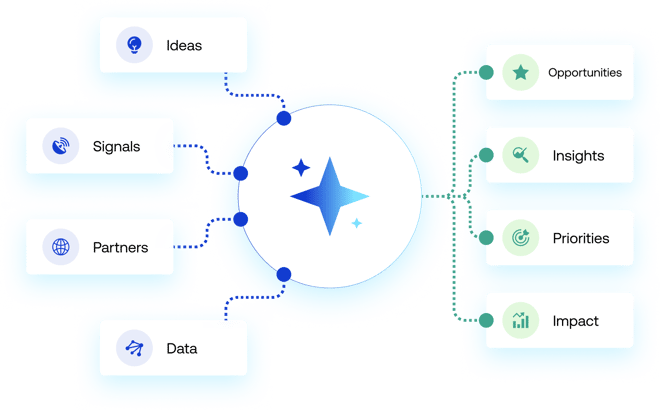
Connect Energy Improvement, Modernization, Partnerships, and Sustainability Execution in One System
Increase workforce participation, improve resilience, reduce costs, explore new technologies and business models, coordinate partner collaboration, and track measurable operational impact across energy and utility operations.